

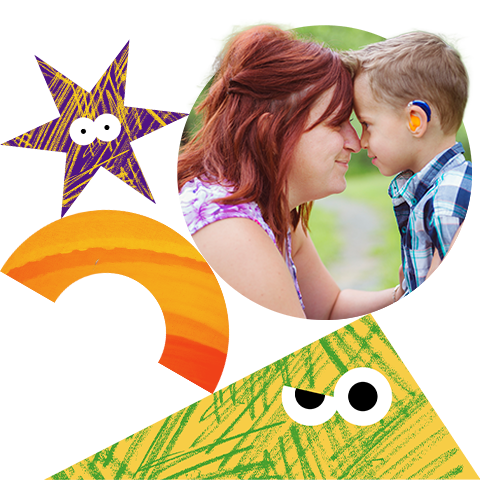
Pathway for hearing parents or carers of deaf children aged 6 months to 19+ years
Join our learning pathway for all hearing parents, carers and grandparents of deaf children: a journey of understanding emotional health, wellbeing, behaviour and much more, for raising confident, kind, emotionally aware and resilient people.
Pathway stages
Bitesize stages for daily steps towards confident parenting and connected relationships.
1. Welcome!
1.1 Welcome!
2. Communication and the Dance of Reciprocity
2.1 The Dance of Reciprocity
2.2 How can you help with communication?
2.3 Babies and communication
2.5 Sign language and written language
2.6 Communication and language
3. Communication and fatigue
3.1 Listening fatigue
3.2 Background noise
3.3 The impact of fatigue
3.4 How can you help?
4. Moving forward
4.1 Reflections
4.2 Congratulations and acknowledgements
About this pathway
Over 90% of deaf children are born to hearing parents. But the important relationships in your child’s life remain foundational in shaping their emotional health and wellbeing. Along this short pathway, you will learn about childhood development and emotional processing while being supported to reflect on your own child’s health and wellbeing, their behaviour and your relationship.
Follow short bitesize content with resources that you can tailor to your child’s developmental age. Our clinical child psychologists, psychotherapists and health practitioners have partnered with experts from BID Services with lived experience of deafness to introduce you to ideas and techniques for nurturing wellbeing. You’ll hear about other hearing parent’s experiences as well.
This online learning pathway can be completed alongside our longer pathway ‘Understanding your child: from toddler to teenager’ or, depending on your child ‘Understanding your child with additional needs’. These pathways cover the key theories underpinning our learning journeys, particularly the concept of reciprocity. They also cover how these ideas can be helpful for common areas of difficulty such as emotional regulation, sleep, toileting and friendships.