Transforming practice for health visitors in Sweden
Transforming Sweden’s professional practice to improve maternal mental health.
One of the greatest strengths of Togetherness is its simple foundations, grounded in public health – proven by the longevity of the Solihull Approach model since its inception. Rooted in practical, evidence-based approaches and centred on relationships, its principles resonate across various cultures, healthcare systems and communities, not only in the UK but around the world.
Evidence of global impact
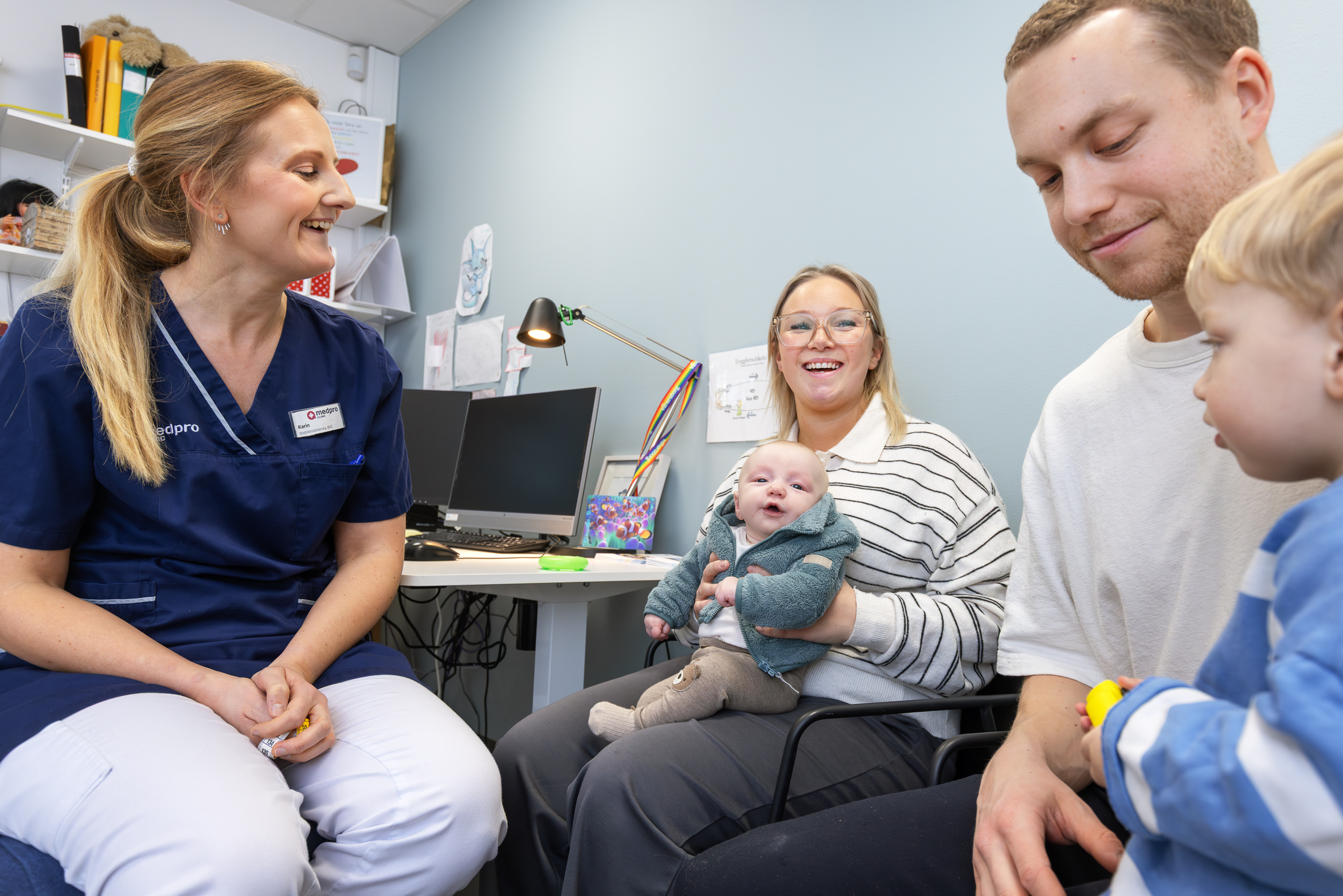
This international impact was reinforced by research from Sweden in 2025, demonstrating how the Solihull Approach has transformed professional practice in infant and toddler healthcare, and significantly reshaped nurses’ attitudes, values, and working methods. Published in the Open Journal of Nursing, the study explored the experiences of specialist nurses supporting families with babies and young children after completing Togetherness training. The study, Specialist nurses’ experiences of working with parental support in each and every encounter, identified nurses’ increased awareness of the emotional needs of families. Study results showed the transformative experiences of specialist nurses (comparable to a Health Visitor in the UK) working in Child Healthcare in Sweden who had completed training in the Solihull Approach model. The interview-based study gathered insights from 14 specialist nurses in Sweden’s Västra Götaland Region, approximately one year after implementation. Using qualitative content analysis, researchers explored how participants felt the training had influenced their professional practice, aiming to understand their lived experiences of using the model in everyday settings.
Putting relationships at the heart of care
The overarching conclusion was clear: the Solihull Approach changed nurses’ attitudes, values and ways of working with parents and children. By focusing on the dynamics of parent-child relationships, nurses developed greater awareness of the emotional needs of families, enabling a more person-centred and relationship-oriented approach to care.
This research came at a time when modern lifestyle changes have increasingly emphasised the importance of children’s mental health and the growing demand for parenting support. Swedish Child Healthcare has increasingly recognised that supporting children’s emotional development and mental health is just as important as monitoring physical health. While nurses were already highly skilled clinically, previous research had identified a gap: practitioners lacked structured methods for supporting parent-child interaction and attachment during routine appointments.
Adapted to reflect Swedish healthcare systems, the Solihull Approach training was introduced to address this need by embedding relationship-based practice into every contact with families, rather than relying solely on separate parenting programmes or group interventions.
“I used to be very quick to give a lot of advice, but not anymore. I think it’s even more important that you try to start a dialogue and discussion more about how they think. Now, I ask more questions and let the parents come up with their answers.”
Nursing professional
A culture shift
Key results showed that the training encouraged a fundamental shift in the way practitioners approached their work. They became more observant and reflective in their interactions with children and their families, reshaping their professional approach – with the Solihull Approach firmly embedded into their practice. It empowered nurses to develop a more reflective, compassionate and relationship-centred approach to care. By offering more individualised support and facilitating meaningful dialogue with families, they were able to encourage parental understanding and ultimately strengthen the parent-child bond, nurturing relationships that would positively impact children’s wellbeing. Grounded in universal aspects of human relationships rather than country-specific healthcare processes, the foundations of the Solihull Approach model have helped Swedish healthcare move beyond clinical expertise towards more personalised care, an emphasis on emotional wellbeing, and professional confidence – all of which supports both parent and child more effectively. The success of the Swedish implementation demonstrates not only that the model can be successfully adapted for different healthcare systems, but that its emphasis on reflective practice, responsive relationships and emotional wellbeing remains effective across cultures.
“The study holds significant relevance for clinical practice. It highlights how specialist nurses, through research-informed training, can observe and influence the interactions between parents and children, ensuring targeted and effective parental support.“
Mona Bryggman
Building for the future
In the region of Västra Götaland the implementation is now almost fully completed, with 500 child health nurses set to be trained by autumn 2026 – and training will now become part of the standard curriculum for all new employees. With the success of the region comes growing interest in other Swedish regions; and the team, led by psychologists Mona Bryggman and Elisabeth Berger, presenting results and developing implementation plans for other regions. As Togetherness continues to grow internationally, this research is important in demonstrating the meaningful difference Togetherness professional training can make within healthcare systems, and the universality of its concepts.
“We are passionate about our desire to develop the work of childcare professionals with parents and children. Through the Solihull Approach we have gained a bridge between psychological knowledge and practical childcare work. It has become a framework and a tool for professionals to understand and put into words the work they do with children and parents. We have learned to strengthen the parents in their parental role, help them feel secure and to see the child’s perspective.”
Elisabeth Berger