Home
> About Us
> Togetherness impact stories
> All impact stories
Supporting women, mums and infants in the UK prison system
Togetherness parent groups giving mothers and babies the best start possible.
Action for Children have long supported families affected by the justice system and the complexities of separation due to prison. The introduction of Togetherness in recent years, spearheaded by Claire Pentin and her team, has transformed the way women and parents are supported in prison.
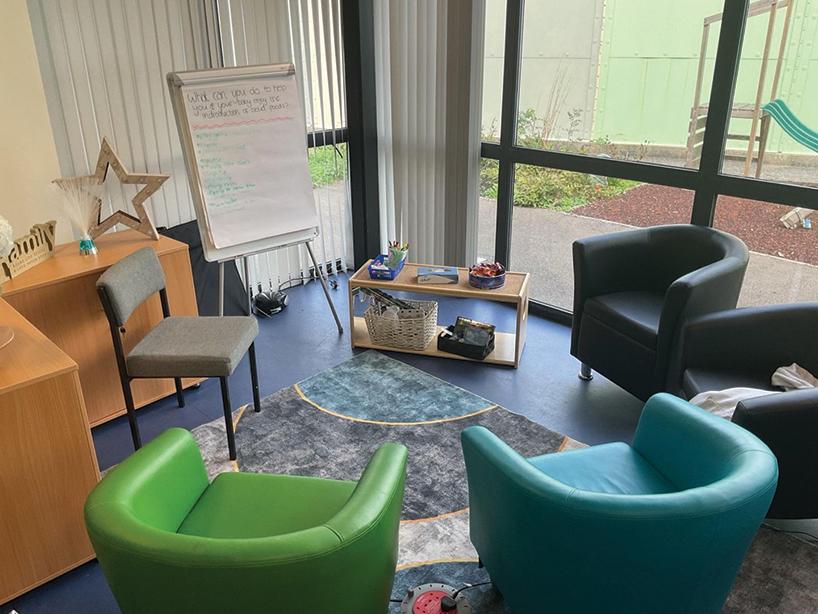
Claire Pentin, Children’s Service Manager
“At Action for Children, our work in the prison estate is centred on giving mothers and babies the safest, most nurturing start possible in circumstances that can be complex, emotional and highly pressured. Through Togetherness we have been able to deliver a culture shift for all relationships that helps to improve outcomes. I trained in the Solihull Approach in a previous Local Authority position. When I joined the prisons programme it was clear that the model could be transformative. Over the past three years, we’ve embedded a multi-agency training programme delivering the Foundation training to 87 prison officers and specialist support roles across the four sites of HMP Newhall, Aksham Grange, Styal and Eastwood Park. I am proud that all staff now have access to Togetherness training, encouraging a change of perspective.”

Encouraging compassion
“For some, I experienced initial scepticism, particularly among those who had no real contact with parents or infants. But soon enough there’s the ‘light bulb’ moment for them. I love seeing that transformation for staff: suddenly they see the women differently through an understanding of how they got to be here – the impact of the women’s own early trauma and brain development in childhood and how this may have shaped their journey to custody. This changes their whole approach to be more empathetic, and meet prisoners with more compassion. When prison staff are able to offer containment, understanding and compassion, they see their relationships change. They can help them to identify how they’ve got to be here and support them to take responsibility for repair or longer term behaviour change.”
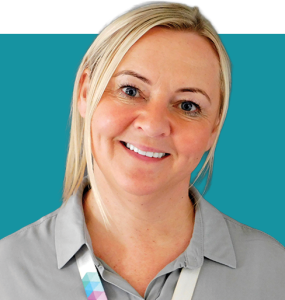
Michelle Blezzard, Nursery Coordinator
“Our Ofsted-registered nursery on the mother and baby unit at HMP Newhall provides wider support for mums and infants, including nursery care, play sessions and tailored family support. Our team enables women to attend education, work, courses and programmes that help them confidently prepare for life with their baby. For some, that might be in prison – we usually keep mums and babies together until around 18 months old – while for others we prepare them for a new life after release. We also work beyond the unit, delivering antenatal support in the main prison alongside the midwife. Some women will later move onto the mother and baby unit, so our relationship is maintained through pregnancy, birth and early parenting.”
Creating consistency through Togetherness
“We adopted the Togetherness parent groups to create consistency, confidence and a shared language across the staff who support pregnant women and new mothers. Many women arrive with different experiences and mixed messages about childcare and early development. In a prison setting, where women may be dealing with separation, trauma, uncertainty and guilt, it felt important that staff were able to offer the same evidence-informed guidance, with empathy and containment. Delivering the parent groups in this setting looks different to the community. In the main prison, we have very small groups, sometimes one-to-one, depending on the women’s circumstances. Rather than expecting a standard group format, we adapt the manual so that each mum receives as much useful information as possible in the time available.”
Finding learning in everyday play
“The programme has a powerful impact because it helps mums understand their baby as a person with developing needs, communication and relationships from the very beginning. Many are surprised by how much babies learn through early interaction, eye contact, talking, soothing and simple, shared moments. Those conversations often create real ‘light bulb’ moments, particularly when mums realise that even everyday communication in the early days is shaping their baby’s development. It also helps mothers notice and respond to their babies. We use play baskets with everyday objects to show that babies don’t need expensive toys to learn. We explore what a baby might discover through touch, sound, attention and interaction. Mums can see play as something meaningful and accessible, and it builds confidence that they can support their baby’s development with what they already have.”
Building confidence by reading baby’s cues
“The women gain confidence reading their babies’ cues. When a baby looks away, some mums initially think the baby is bored, but they may simply be processing what has happened, needing a moment to regulate. That shift in understanding helps mums become more attuned and less anxious about ‘getting it wrong’. The Togetherness parent groups also create space for practical worries to emerge. Mums often tell us they are nervous about parenting after release. Voicing those worries means we can respond with demonstrations, reassurance and clear guidance. Safe sleep has been one of the most important learning areas. Mums need to understand why babies sleep in their own safe space and why bedding, blankets and co-sleeping risks must be managed carefully. The groups give us a way to explain the guidance clearly and consistently, so they understand the reasoning, rather than feeling they are being controlled.”
Supporting informed choices
Learning has also influenced feeding conversations. Breastfeeding is not always common among the women we support but recently two mums chose to breastfeed, which we celebrated. We have normalised these discussions and given mums more knowledge and confidence to make informed choices, supported by staff who are alongside them when their baby arrives. The postnatal programme supports mums to think about life after release. Discussions about childcare have prompted some to research day nurseries and make enquiries, with one securing a place for her child prior to release. Our ‘through-the-gate’ support means family support workers can continue contact with mums once they leave us, and we sometimes receive updates and photographs from families doing well.
“One mum who really valued the learning encouraged her baby’s dad to take part in a course in the community so that he could understand the ideas and support their baby in the same way. For us, that shows how learning can extend beyond the prison and contribute to a shared parenting approach within the wider family.”
From uncertainty to connection
Through Togetherness, mums gain knowledge, confidence and a way to understand their baby’s world. It helps them move from fear or uncertainty, towards curiosity and connection. The work is not always straightforward – we are constantly adapting to changing needs, trauma, complex family circumstances and the realities of prison life. But the Togetherness parent groups have given us a practical and compassionate foundation. They help us support mums to not only learn what to do, but understand why it matters: that every interaction, moment of comfort, safe routine and opportunity to play can strengthen her relationship with her baby.
Our work so far:

87 staff trained in the 2 Day Foundation

14 Parent Group facilitators

64 parents followed the antenatal programme delivered by trained midwives

26 parents have taken part in the postnatal course