Home
> About Us
> Togetherness impact stories
> All impact stories
Transforming classrooms with mental health in mind
A Whole School approach to Togetherness in Scottish schools.
In North Lanarkshire, Togetherness has grown from a local initiative into an established part of practice across the region’s early learning and schools, as well as bridging the gap between different services across North and South Lanarkshire.
How Togetherness became part of everyday practice
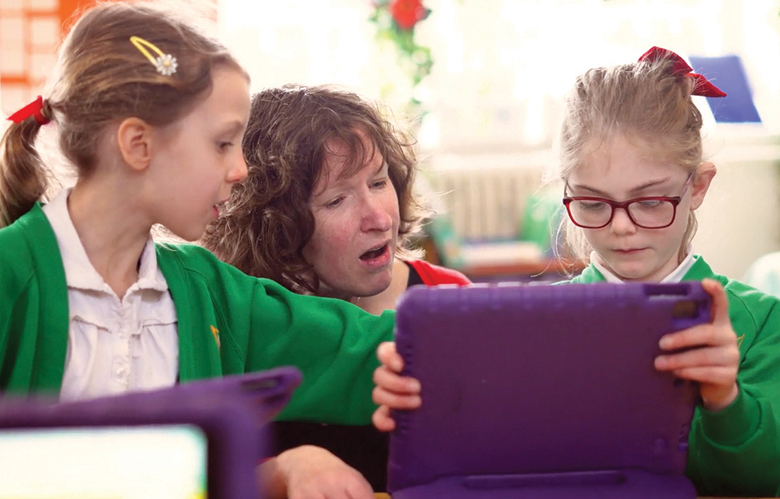
Cheryl Valentine, Early Learning and Childcare Quality Officer has played a crucial role in that journey. Linda McCulloch, Equity and Early Intervention Training Lead, now co-ordinates Togetherness training across Lanarkshire, supporting practitioners to embed the approach in their everyday practice. Cheryl: We talk a lot about early intervention, but I think it’s really important to remember that it’s never too late for relationships to make a difference. When we talk about brain development and the impact of neglect or early trauma, we explain that children can continue to form new connections. A consistent, supportive adult relationship can make a real difference. One of the biggest impacts of Togetherness is helping staff understand the why behind behaviour. If they understand children’s reactions, their development and the impact of trauma and neglect, that changes how they respond when children are struggling. It’s about moving away from simply reacting to behaviour and thinking about what the child might be communicating.
Bringing Togetherness to schools
Cheryl: Togetherness started for me more than a decade ago, working in a nursery in a small town in North Lanarkshire. We were offered training locally alongside health visitors, social work and community learning colleagues, and something just clicked.
After training staff, we noticed the difference – there was a real shift in our culture. We did really well in an inspection, and I was then asked to go out and deliver training to others, so it really grew from the bottom up. It wasn’t a strategic decision to implement Togetherness across North Lanarkshire; it was people becoming early adopters after seeing the value of it.
Initially the training was mainly for nurseries but schools wanted in on it too, so we expanded the programme. It’s taken 10 to 12 years – like turning a tanker! – but now Togetherness is included in our children’s healthcare service and childcare plans.
Linda: A big part of what I do is helping practitioners embed Togetherness into their everyday practice, rather than seeing it simply as a training course. We’re also working alongside colleagues to deliver the Foundation training to newly qualified teachers. The ambition is that, before people even come into schools as teachers or practitioners, Togetherness becomes part of their induction.
“We often say, ‘Children aren’t challenging. Children are having a hard time’. When staff make that shift in their thinking, they take things less personally and are much more likely to respond in an understanding and attuned way.”
Creating a shared culture
Cheryl: Whole School training is really important. We want everyone to be involved – the headteacher and senior leadership team, teachers, catering staff, janitorial staff, clerical staff – everybody who interacts with children. Leadership makes a big difference. Where the headteacher and senior leadership team are invested, Togetherness embeds much more quickly and becomes more consistent and sustained. Linda and I have also developed a self-evaluation tool for schools and nurseries. It helps settings think about how they’re using the approach in everyday practice, how they use it with individual children, and how it is reflected in their policies and practice. We want Togetherness to become a golden thread running through how a setting does its business: how people interact with each other, how they talk to parents, how they think about parents and how they respond to children. With the changing needs and profiles of children coming into nurseries now, teaching is more of a challenge. There’s a much higher number of children with neurodivergent profiles, making class environments stressful and more difficult for staff to manage. But where we’ve got that strong culture of Togetherness in the background, people understand that they are supported as much as the children. It doesn’t eradicate the difficult situations. Staff can still become overwhelmed when a child is very dysregulated or when they feel they’re not meeting a child’s needs. But it gives them another emotional tool to draw on. It helps them understand what’s happening and gives them ways to cope.
Understanding the child behind the behaviour
Cheryl: Togetherness also helps staff to be less hard on themselves. There can be a real sense of failure when a practitioner feels they haven’t been able to help a child regulate or do what they want them to do. Togetherness helps move that responsibility away from the individual practitioner and towards understanding the child’s individual needs. We’re still very clear that boundaries and limits are important. It’s about saying yes to the feelings while being clear that certain behaviour isn’t acceptable – and finding a nurturing and understanding way to hold those boundaries. Linda: I see that when I’m out visiting settings. Staff are becoming much more curious about what’s behind a child’s behaviour and what connection they might be needing. We’re moving away from punitive responses and towards giving children time and space to regulate their emotions. We’re using language to help children understand what they’re feeling, and we’re bringing children’s voices into that process. You can actually see the approach becoming part of everyday practice. Staff are calmer with children, and there’s more curiosity about what’s happening for them.

The power of containment
Cheryl: One aspect of Togetherness that has been particularly transformative is containment. People often realise they’ve been using containment all the time, even before they were trained in Togetherness. The training gives them a name for it and helps them understand its power. Once people understand containment, they often become more consistent in using it – with children, parents and colleagues, but also in their own personal relationships. And it’s not just the language. It’s the relationship that develops through using it. Relationships become stronger, less tense and less judgemental. When things aren’t going well, there’s more understanding. Linda: When the whole team starts using that language, that’s when you really see the culture change. We encourage staff to tap into each other when they’re feeling overwhelmed or ‘full’. It’s okay to ask colleagues for help and support. In one setting, almost the whole staff team had been trained, and you could feel that ethos as soon as you walked through the door. Togetherness becomes something that people use with each other as well as with children and families.
Supporting parents
Linda: Parental support is really important. We direct parents towards the Togetherness online pathways, but we also train practitioners to deliver the ten-week, face-to-face Understanding your child programme. You often see those ‘light bulb’ moments around weeks three or four, when parents begin to understand their children in a different way. What’s lovely is that parents realise they’re not alone. They can share their experiences with other parents who are going through similar things. I’ve seen parents build relationships through the group and even set up their own WhatsApp groups so they can continue supporting each other afterwards. By the end of the programme, we often see conflict decreasing, and closeness increasing, between parents and their children. Cheryl: I’ve delivered lots of parenting interventions over the years, and Understanding Your Child is a really powerful programme. You can see parents starting to tune into their children more after just a few weeks.
Early intervention – at any age
Cheryl: We often get asked whether a difficult first two years means it’s a ‘done deal’. Absolutely not. Children can form new relationships, and there are further periods of brain reorganisation during development. Linda: Even when a child is only with you for part of the day, those positive interactions matter. We talk about good enough interactions. If children are getting consistent, positive experiences while they’re in nursery or school, those relationships can support their emotional health and wellbeing.
Looking ahead
Cheryl: There are huge challenges facing children, families and schools now, and we need to keep adapting our practice. We’re seeing increasing numbers of children with neurodivergent profiles, alongside concerns around anxiety, emotional regulation, screens and social media. But I think our response has to remain rooted in relationships. We need to support parents rather than shame them or tell them what they’re doing wrong. It’s a universal need. It’s not just about particular communities or areas. We need to help parents understand what their children need, rather than dictate or judge. Linda: And that applies to everyone. Children and parents can both experience anxiety and emotional dysregulation, so our settings need to continue developing a trauma-informed workforce that can respond to different needs. For me, that’s what Togetherness is about: making sure people feel safe, understood and supported. Togetherness can transform practitioners’ working days with children and families, but it also transforms them as individuals in their own relationships. Cheryl: That’s why I’m still so invested in it. It’s about relationships. It’s about understanding. When you see the difference it makes, it’s not a big ask to keep championing it.