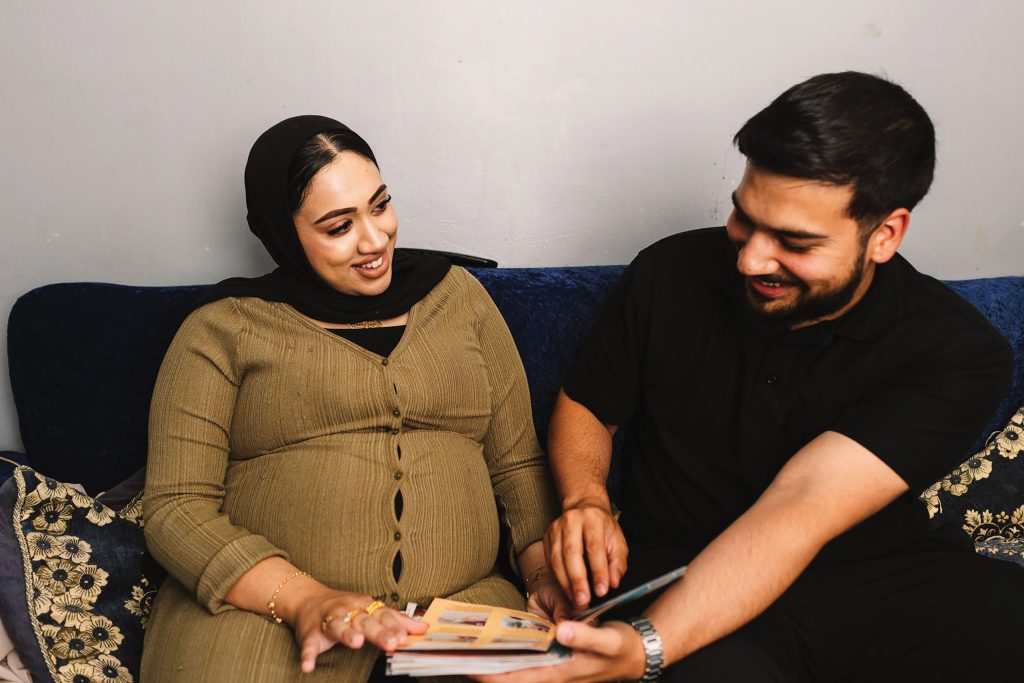

Shaping community antenatal support with Togetherness
Equipping the workforce through Antenatal Parenting Group Facilitators’ training.
United by a shared understanding of responsive relationships and compassionate care, the Togetherness team’s relationship with the Aneurin Bevan University Health Board (ABUHB) has spanned decades, with the Solihull Approach model embedded into its services to parents, as well as supporting its staff to deliver compassionate care and provide early intervention.

The first 1,000 days
This early intervention reflects understanding that the first 1,000 days of life are important for building the foundations in the brain for good mental health – an opportunity to shape lifelong mental health and wellbeing. By encouraging parents to understand infant brain development, responsive caregiving and the emotional journey into parenthood, Togetherness groups support parents to learn about emotional health and develop confidence in parenting for a positive impact on behaviour, communication and closeness, especially during this crucial developmental period.
Compassionate care from the start
Avril Jones is a healthcare professional and Baby Friendly Initiative (BFI) community coordinator, as well as being a Togetherness National Trainer. She has been instrumental in cascading Togetherness within ABUHB, in particular advocating for understanding and support for those all-important first 1,000 days. “With Togetherness training, ABUHB practitioners have been equipped to help parents begin building a relationship with their baby before they are born. Rather than simply teaching knowledge, the Togetherness model changes the way people think. It encourages professionals to pause and see the world through another person’s eyes – underscoring empathy, containment and reflection. That reflective practice becomes part of everyday care, influencing conversations, decision-making and relationships. Embedded into our culture and with such a high percentage of our staff now trained, we proudly hold Togetherness Gold Accreditation.”

“It’s been great to see the change of language use from practitioners – the ‘light bulb’ moment when something clicks and you think, ‘this has changed people’s practice’. They’re thinking in a different way so it’s going to change the way they interact with the public. Parents are supported to understand that perfection isn’t the goal. Instead, responsive, good-enough parenting builds the secure relationships that help children thrive.”
Changing practice, changing perspectives
“The training has also strengthened those delivering care. Togetherness principles have been woven into reflective practice and staff support, recognising that professionals who feel contained and supported are better able to provide compassionate care for others. This parallel process has helped build resilient practitioners alongside well-connected families. Many of the features of the Solihull Approach model – in particular reflective practice for practitioners – have since been adopted by the wider Welsh NHS model, showing the importance of embedding these fundamental approaches, and the evidence-based impact adopting Togetherness models has made. It’s a very clever way of supporting people to be quite holistic in the way that they deliver their practice. Many learn the theory, policies, Standard Operating Procedures – but none of that works if you haven’t got an individual that can deal with it on the ground. You have to support that practitioner to use all those tools in practice; to build the professional alongside the clinical – this model does that.”
Taking Togetherness to the community
“Equipped with the foundations in their own training, the ABUHB team have found flexibility in delivering the approach in different settings, across communities, ensuring their support for parents remains rooted in the same core Togetherness principle: the belief that relationships matter. Delivered in busy towns and cities, to rural areas relying heavily on community-based practice, the approach continues to help practitioners facilitate meaningful learning and discussions that help parents feel informed, understood and more confident for the journey ahead. With dedicated parent groups, we can ensure families have the confidence, skills and understanding to nurture healthy relationships with their baby from the very beginning. It is the confidence parents gain, the emotions they feel able to talk about, the inclusion of both mums and dads, and the friendships and support networks that grow from these initial interventions.”