Healthier starts thanks to NHS antenatal online
Championing early intervention and responsive relationships that support mental health and wellbeing.
Great relationships – connections – are key to emotional strength and wellbeing. A proud NHS organisation, we know that prevention for both mental and physical health outcomes starts with early intervention; before birth, in antenatal learning. Our online pathways help to address health inequalities through greater access to high quality, easy-to-digest content.
Supporting the journey
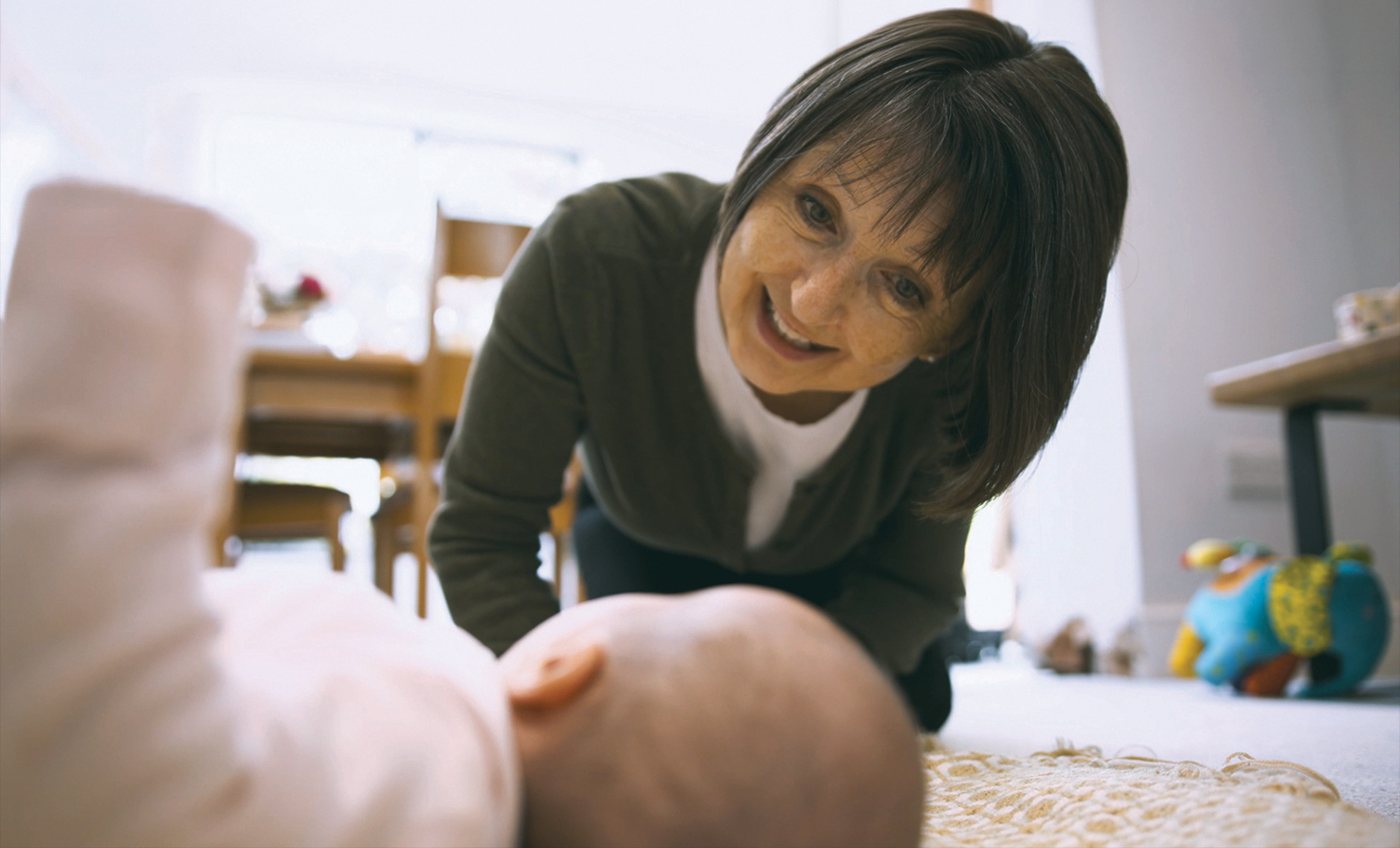
Mary Rheeston is a Health Visitor and our Togetherness Manager. With more than 30 years of experience, Mary shares the importance of these free, accessible courses, and the difference they can make to the community. “As a mother journeys through the different stages of pregnancy, her focus shifts from managing physical and hormonal changes to preparing for the birth and meeting her baby, whilst fathers and partners are also on an emotional journey. Emotions can be powerful and confidence delicate for mothers, fathers, partners and those around them. Accessing generic information about pregnancy, birth and caring for a newborn is plentiful online, but having access to free, trustworthy, online pathways – considering mother and baby’s feelings alongside the practical aspects of pregnancy – is not so easy. Many courses discuss caring for a newborn, but it’s rare to see a class or online learning consciously considering the fundamentals of building a relationship with the baby before birth. Parents may have masses of information but often still don’t know what the right thing to do is. Togetherness online learning recognises that parents want information about the physical steps of pregnancy – labour and birth, what pain relief is available and what to expect in the labour stage. The pathways address all of this, with content refreshed annually, in partnership with midwives, and designed to align with UNICEF baby-friendly initiatives. But also having time to reflect is vitally important. How do they feel about a specific pain relief or the birth experience?”

Making space for feelings
“Mothers will be exposed to many opinions while pregnant and are at risk of not knowing how they feel. Feelings are strong and intense while pregnant – it’s an emotional time – and parents often express feelings of anxiety and worry as well as the excited anticipation of meeting their baby. Anxiety and worry can be normal, but when feelings become overwhelming they can affect how we function and our confidence in making choices that suit our individual circumstances. Being able to recognise what we are feeling and how we process feelings helps a parent feel less overwhelmed. When mothers are asked to think about their pain relief preference, what positions in labour feel comfortable, or how they want to feed their baby, they will hopefully have space to consider the options. To help with this, the Togetherness online pathways encourage going back to basics, where a mother can tune into what she is feeling and what will be helpful from others to support her. Being able to name a feeling and know someone who is ready to listen without being dismissive, and allow time to process feelings – containment – is not always something we realise we need, but is what support truly looks like. This is why it’s a pathway available to the wider family and friends too. Building confidence in recognising feelings and identifying support networks helps parents process the many decisions they will make about birth, feeding and their parenting journey.”
“Being able to name a feeling and know someone who is ready to listen without being dismissive, and allow time to process feelings – containment – is not always something we realise we need, but is what support truly looks like.”
Building stronger foundations
“Many mothers exist in the moment of their pregnant state, with a window of consideration only a few weeks ahead. So parents usually consider antenatal classes or online courses from about 30 weeks; earlier can feel too soon. The online pathway means that mothers, fathers and wider family members can decide when it’s right for them to start, whenever and wherever suits them. The pathways are also accessible through translation to lots of different communities. Professional translations in common, UK-spoken languages increase reach, and voice-over recordings improve accessibility, helping to increase engagement with the resources. The course can trigger conversations with others that parents may not have had, which can be especially helpful for fathers. It can offer a vehicle to open a conversation about feelings and pregnancy, whether it’s between partners or with friends. And that’s what it’s fundamentally about: making the connections that help us to build strong, nurturing relationships with both the baby and the immediate carers.”
How we’re doing so far
Our online pathways have so far helped to improve:

Intentions to breastfeed (+18%)

Feeling close to the baby (+41%)

Intentions to quit smoking (+9%)
The 18% increase in intention to breastfeed may seem low, but the shift is important to normalise breastfeeding in the community. These results are immensely important when we consider the health of the mother and baby before and after birth, and the growing relationship between the baby and the mother, father or partner.